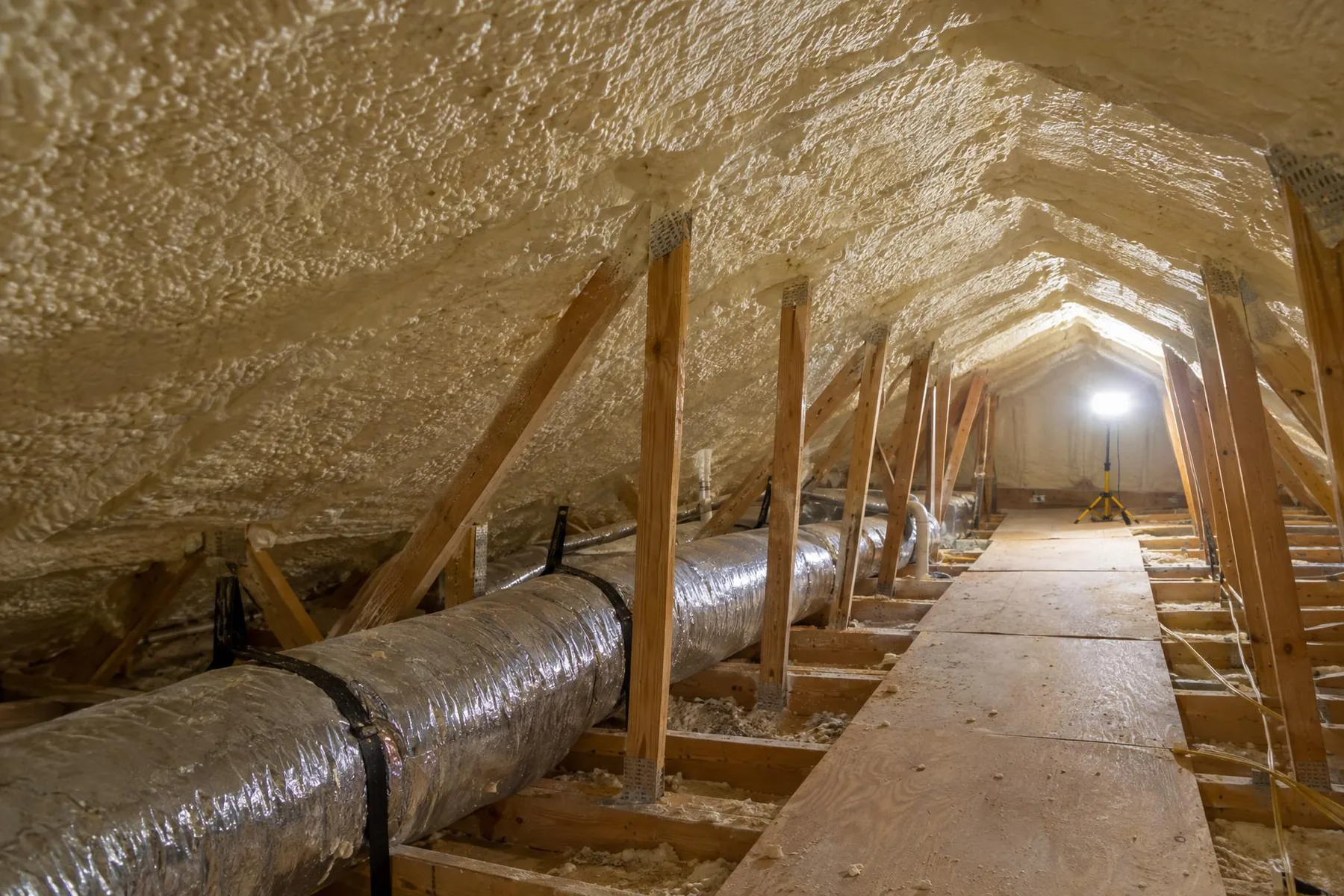
An attic in the Phoenix area can reach about 130 degrees in summer, and the air conditioner's ducts often run right through it. Spray foam on the underside of the roof deck turns the attic into an unvented space and brings those ducts inside the conditioned part of the house. The crew sprays in even passes, checks the thickness against the estimate and keeps the foam off the attic floor and the air handler. Rooms below the attic get less heat from above, and the system has less to fight.

Existing walls, garage walls and attic surfaces in Surprise homes all take spray foam, and each surface calls for its own foam. Open-cell foam costs less and fills cavities. Closed-cell foam packs more R-value into each inch and suits a roof deck. The estimate says which foam goes on which surface and how thick it will be, so you can compare it line by line with any other bid you collect. Furniture and floors get covered before the first pass, and you can ask for a walk through the finished work before the crew packs up.

A Surprise attic with thin or settled insulation often needs more material, not a rebuild. Blown-in cellulose or fiberglass goes over the attic floor in an even layer and reaches awkward corners that batts miss. Blown-in is the most cost-effective choice where drywall is already in place, and the estimate shows the depth you will end up with. If old insulation is soaked, pest-damaged or matted down, the crew explains whether removal belongs in the price, and removal always appears as its own line so you can decide.

New Construction Spray Foam Insulation
Builders and owner-builders in Surprise can have foam applied before the drywall goes up. On a new build, spray foam on the underside of the roof deck and on the walls gives continuous coverage with fewer gaps to chase later. The crew works around the framing, electrical and plumbing schedule so other trades keep moving, and the written estimate lists each surface by name. A builder gets one line per surface and one contact for scheduling, which keeps the job on the same schedule as the drywall crew behind it.

Commercial Spray Foam Insulation
Shops, warehouses and metal buildings gain heat quickly because metal conducts it. Closed-cell foam on metal roofs and walls is the common choice for these buildings, and the crew sprays it in controlled passes. Vents, doors and equipment are masked before the first pass, and the work schedule is agreed with the building owner or manager first. A business keeps operating around the job. The written estimate lists the roof and wall areas separately, so a manager can see what each area costs and phase the work if the budget calls for it.

Garage Spray Foam Insulation
A garage wall that backs onto living space passes heat straight through. Foam on garage walls and the ceiling above slows that heat, and the estimate lists the wall height and the foam type so the price is easy to check. Garage doors and stored items stay protected while the crew works. A finished garage then holds temperature better, and the rooms next to it stop borrowing the garage's heat. Ask about the ceiling above a garage too, because heat moves upward into any room built over it.